
 1833-4133
공부기록 시작!(UNIT 1~4)
드디어 시작해 본 온라인테솔!
영어강사자격증인 TESOL자격증을 취득하는 방법에 여러가지가 있는 것 같았는데,
나는 WVC테솔을 신청했다.
이유는 :
1. “미국 대학교“라는 타이틀이 더 공신력있게 느껴짐
2. 모든 과정이 온라인으로 이루어진다는 점
3. 대학교에서 오프라인으로 배우는 테솔도 고민했지만 오프라인 테솔은 기간도 비용도 이동거리도 부담되었고, 이미 영어수업을 3년동안 해오고 있는 나로서는 실기가 가능하다는 점이 그리 큰 메리트로 느껴지지는 않았다. 왜냐면 이미 매일이 실전이니까..
4. 테솔을 신청하면 어린이 테솔까지 같이 무료로 수강가능 하다는 점! 초등영어과외를 주로 하고 있어서 이 과정이 나에게 실질적으로 제일 도움이 될 것 같았다.
그리고,
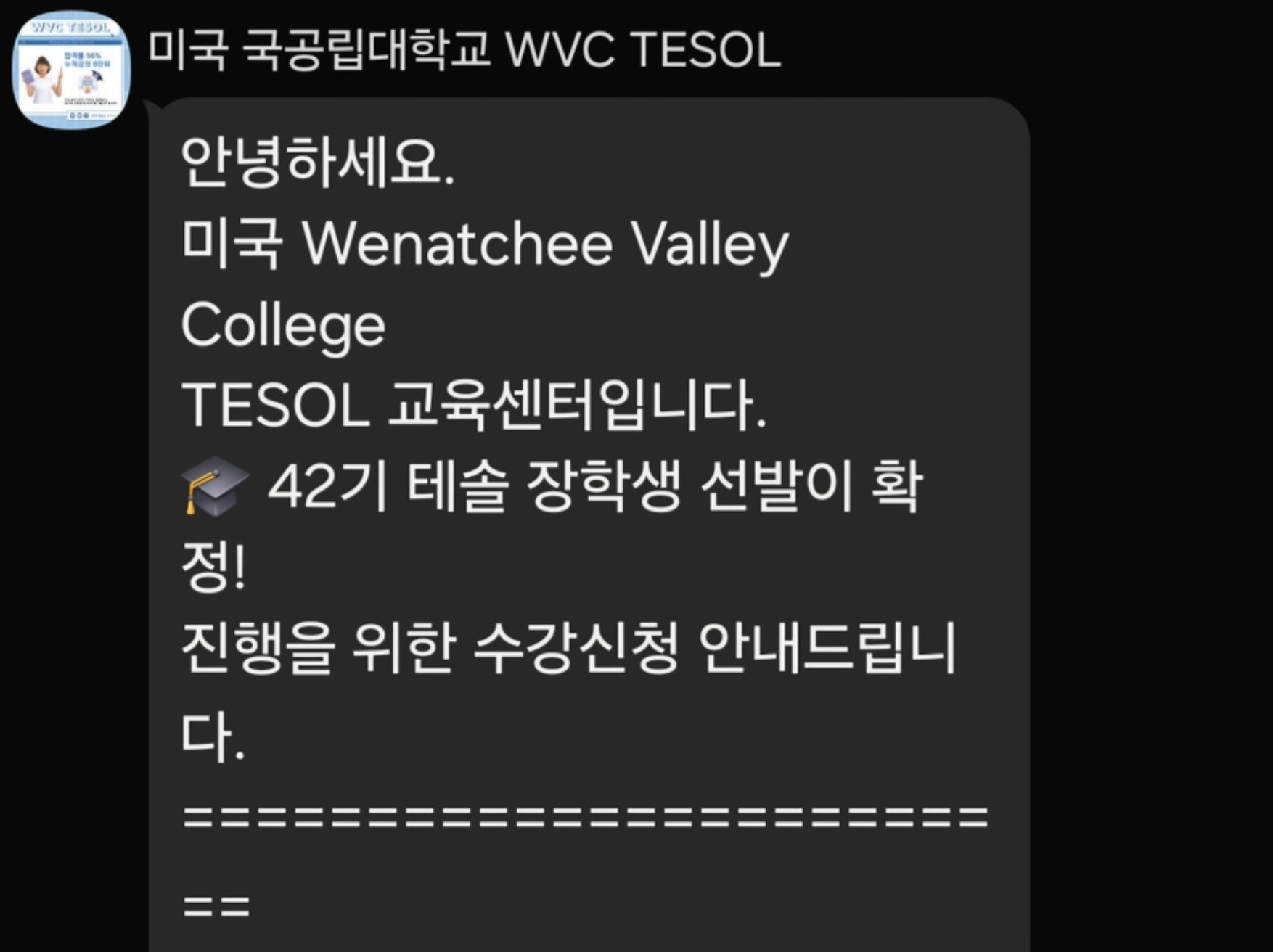
장학생 선발도 됐다!
매달 말에 장학생을 모집하니 참고해서 신청해보면 좋을 것 같다.
장학 혜택에는 :
1. 테솔 취득 장학금 65만원 지원
2. 어린이테솔(TEC) 무료수강
3. 원어민 파닉스 지도사 무료수강
4. 1:1 코칭 E.T 실습과정 무료수강
이 있다.
아마 온라인테솔 신청 전에 가격면에서 부담이 되어 신청을 망설이는 분들도
장학혜택과 함께라면 더 편한 마음으로 공부할 수 있을 것 같다.(는 제 얘기입니다)
월말에 홈페이지에 올라오는 공지사항을 열심히 확인하기!
문의 카톡을 드리면 더 자세히 설명해 주신다.
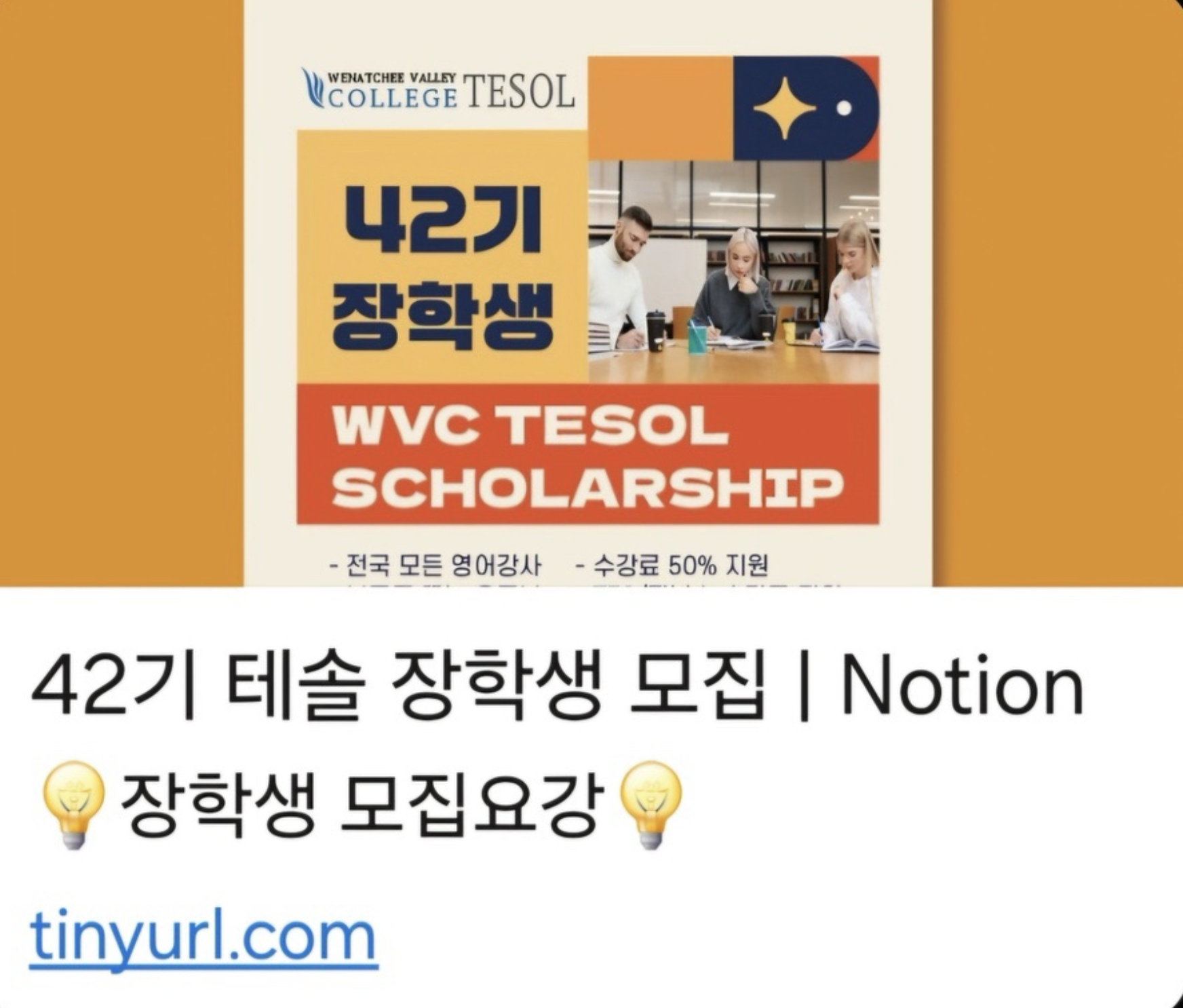
장학생으로 선발되고 나서는
온라인테솔 강의를 틀어두고,
들으면서 블로그에 필기를 하고,
그 필기를 노트에 적어서 다시 요약하는 과정으로 공부했다.

이렇게 하면 좀 오래걸리긴 하지만
그래도 한 번 강의를 들을 때 제대로 공부하는 느낌이 나서 좋다.
[UNIT 1 : An Introduction to Language Learning]
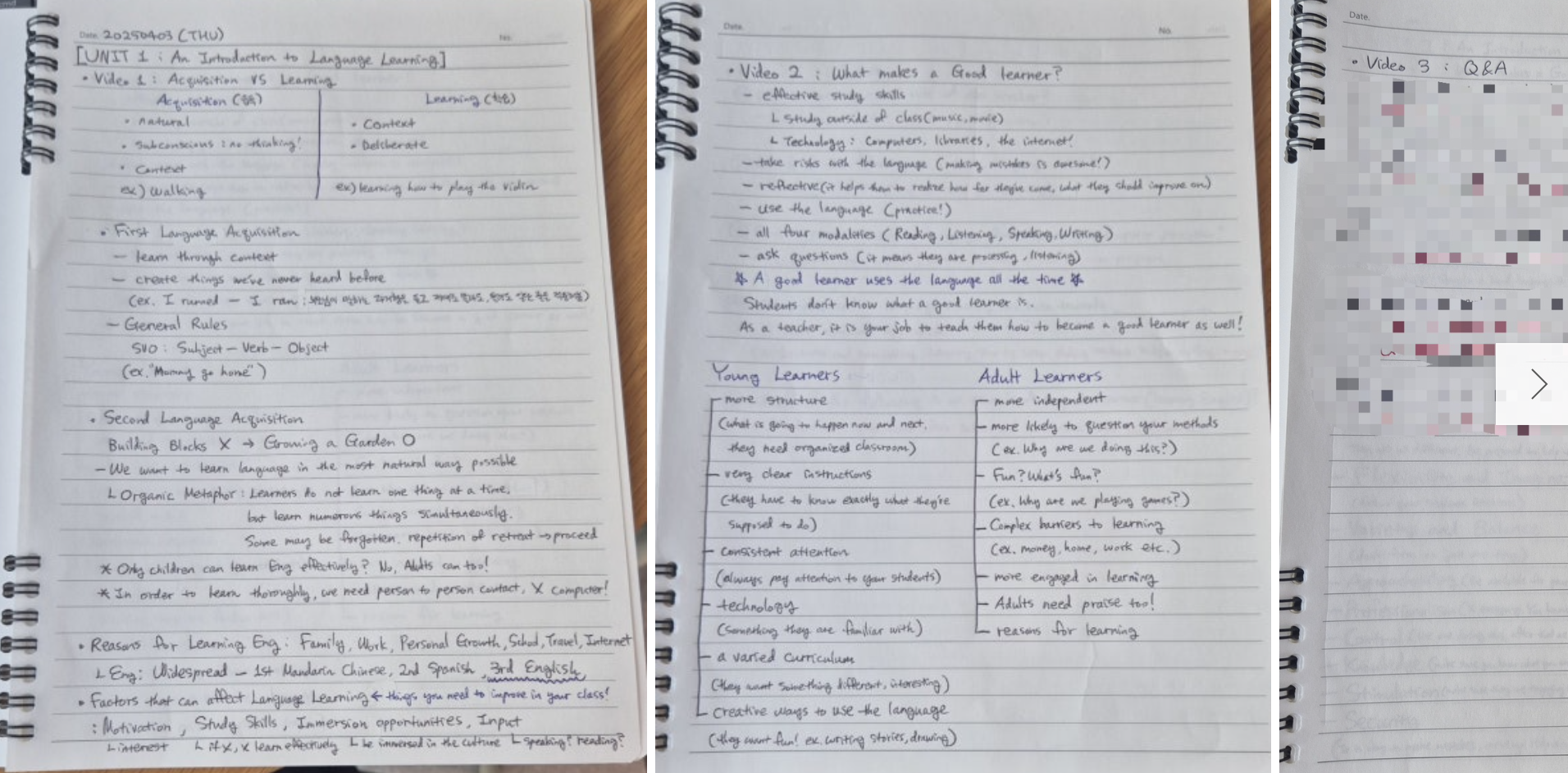
Video 1 : Acquisition VS Learning
Acquisition (natural, subconscious, context (ex. walking)
VS
Learning context, deliberate (ex. learning how to play the violin)
First Language Acquisition
learn through context.
create things we’ve never heard before
(ex. I runned - 부모님이 말하는 과거형을 듣고 제대로 몰라도, 틀려도 일단 룰을 적용해 봄)
General Rules
SVO : Subject - Verb - Object
ex) “Mommy go home”
Second Language Acquisition
Building Blocks X - Growing a garden O
We want to learn language in the most natural way possible
Organic Metaphor : Learners do not learn one thing at a time, but learn numerous things simultaneously. Some may be forgotten.
Only children can learn English effectively? No, Adults can too!
In order to learn throughly, we need person to person contact, X computer!
Reasons for Learning English
English : Widespread 1st : Mandarin Chinese, 2nd : Spanish, 3rd : English
: Family, Work, Personal Growth, School, Travel, Internet
Factors that can affect language learning
: Motivation(interest), Study Skills(without it, X can learn effectively), Immersion opportunities(you need to be immersed in the culture), Input(speaking? reading?)
These are the things you need to improve in your classroom
Video 2 : What makes a Good learner?
- effective study skills
Study outside of class(music, movie) / Technology : computers, libraries, the internet!
- take risks with the language (making mistakes is awesome!)
- reflective (it helps them to realize how far they’ve come, helps them to see what they should improve on)
- use the language (practice!)
- all four modalities (reading, listening, speaking, writing)
- ask questions (it means they are processing, listening)
*A good learner uses the language all the time*
Students dont’ know what a good learner is. As a teacher, it is your job to teach them how to become a good learner as well!
Young Learners
- more structure (what is going to happen now and next. they need organized classroom)
- very clear instructions (they have to know exactly what they’re supposed to do)
- consistent attention (always pay attention to your students)
- technology (something they are familiar with)
- a varied curriculum (they want something different, interesting activities)
- creative ways to use the language (ex. they want to do fun things! writing stories, drawing)
Adult Learners (very different from Young Learners)
- more independent
- and more likely to question your methods
- Fun? What’s fun?
- Complex barriers to learning (money, home, work etc)
- more engaged in learning
- Adults need praise too!
- reasons for learning
Summary
- First language acquisition : quick, subconcious, follows a pattern
- Second language acquisition : less concrete, more organic
- Reading, Writing, Speaking, Listening
- Motivation, study skills, immersion, input
- Younger learners
- Adult Learners
Video 3 : Q&A
복습 & 문제 풀이
[UNIT 2 : An Introduction to Language Teaching]
Previous imageNext image
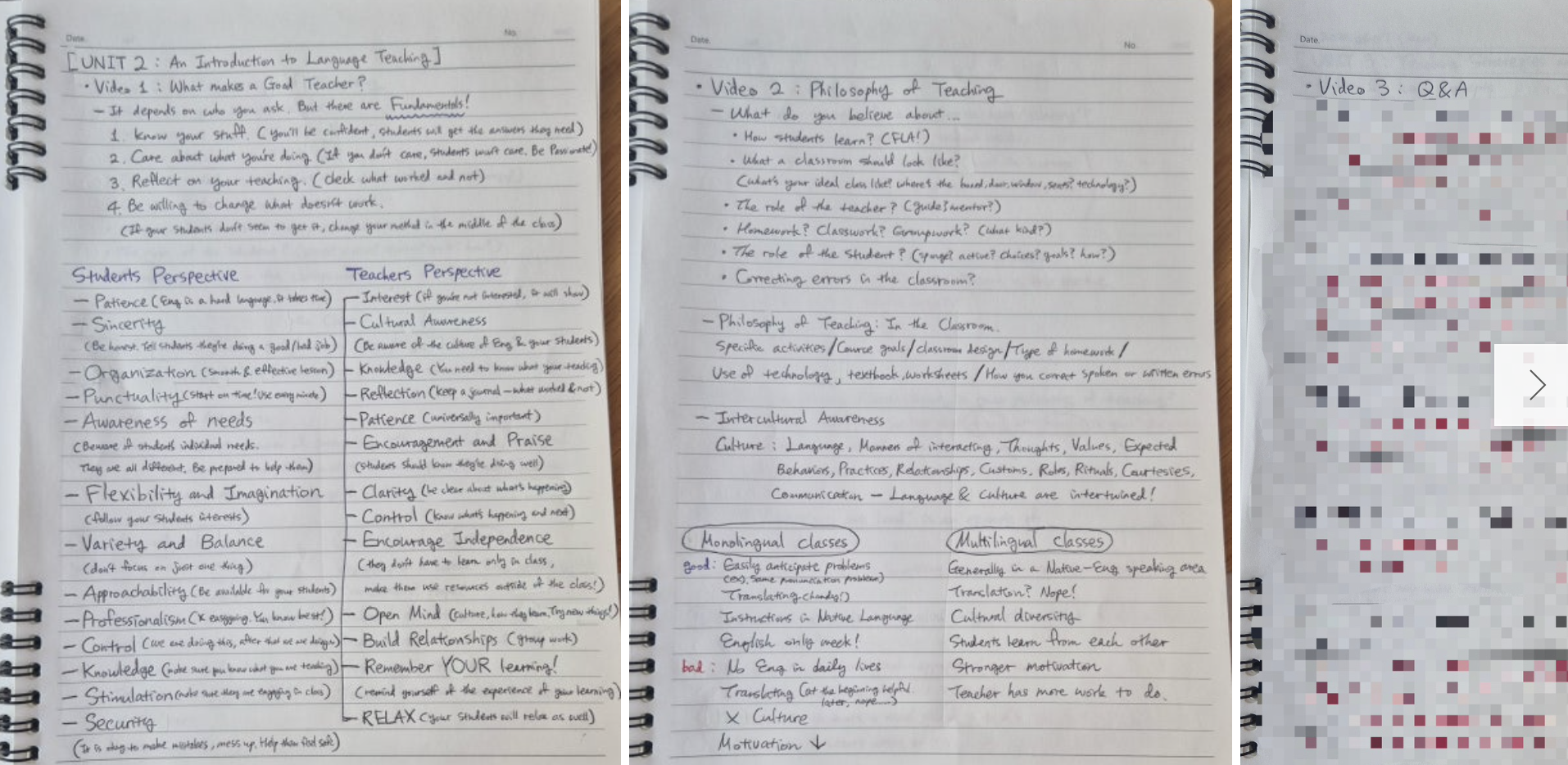
Video 1 : What makes a Good Teacher?
What makes a good teacher?
- It depends on who you ask. But there are fundamentals!
1. Know your stuff. (you’ll be confident, students will get the answers they need)
2. Care about what you’re doing (If you don’t care, students won’t care. Be passionate!)
3. Reflect on your teaching. (check what worked and not)
4. Be willing to change what doesn’t work. (If your students don’t seem to get it, change your method in the middle of the class)
Students Perspective
Patience (English is a hard language to learn, it takes time)
Sincerity (Be honest. Tell your students if they’re doing a good / bad job)
Organization (smooth & effective lesson)
Punctuality (Start on time! Use every minute you have)
Awareness of needs (Beware of student’s individual needs. They are all different. Be prepared to help them)
Flexibility and imagination (Follow your students interests)
Variety and Balance (don’t focus on just one)
Approachability (Be available for your students when they are struggling)
Professionalism (if you become too easygoing, students will take advantage of that. You know best!)
Control (We are doing this, and after that we are doing that)
Knowledge (make sure you know what you’re teaching)
Stimulation (make sure that they are engaging in the class)
Security (It is okay to make mistakes, mess up. Help them feel safe)
Teacher Perspective
Interest (if you’re not interested, it will show in your teaching)
Cultural Awareness (Be aware of the culture of English and your students)
Knowledge (You need to know what your teaching)
Reflection (keep a journal - what worked and not)
Patience (universally important)
Encouragement and Praise (your students should know that they are doing well)
Clarity (be clear about what’s happening)
Control (know what’s happening and next)
Encourage Independence (they don’t have to learn everything in class, make them use resources outside of the class)
Open Mind (culture, how they learn, try new things)
Build Relationships (groups)
Remember YOUR learning! (remind yourself of the experience of your own learning)
RELAX (your students will relax as well)
Video 2 : Philosophy of Teaching
2 pages
Beliefs about teaching and learning
How you put those into practice
What do you believe about…
How students learn? (FLA!)
What a classroom should look like? (what’s your ideal class like? where’s the board, door, window, seats? technology? see how close you can get to that)
the role of the teacher? (guide? mentor?)
homework? classwork? group work? (what kind of work?)
the role of the student? (sponge? active? choices? goals? how?)
correcting errors in the classroom?
Philosopy of Teaching : In the Classroom
Specific activities (game? project? group work?)
Course goals
Classroom design
Type of homework
Use of technology / textbook / worksheets
How you correct spoken or written errors
Intercultural Awareness
Culture - Language, Manners of interacting, Thoughts, Values, Expected Behaviors, Practices, Relationships, Customs, Roles, Rituals, Courtesies, Communication
Language and culture are intertwined
Culture of English
Cultural diversity in the classroom
What does Intercultural Awareness look like in the classroom?
The Target Culture
- No Stereotyes (Mcdonalds)
- Avoid imposing your cultural beliefs on your students (Your experiences may not be everyone’s)
Your Student’s Culture
- Be aware of and show respect for where your students come from in life
- Allow your students to teach each other, especially in a diverse classroom
*Be aware of, and show respect for where your students come from in life*
Monolingual Classes
Benefits
- Easily anticipate problems (ex. same pronunciation problem)
- Translating (it can be handy, but X too much)
- Instructions in Native Language (X overwhelm)
- English Only Week!
Disadvantages
-Where’s the real world? (no eng in daily lives)
- Translating (it may help at the beginning, later, nope)
- Culture? (in textbook, movie X real life)
- Motivation (not 100 in eng environment, it can fall)
Tips & Tricks
- Be Chill
- Bring people into the class
- Projects: real-world! (ex. how would you order in the states?)
- TV, Movies, Music (different speakers)
- Newspapers (not too hard, enjoyable)
- Magazines
- Build Resources
- Library
- Network (exchange ideas)
Multilingual Classes
- Generally in a native-English speaking area
- Translation? Nope!
- Cultural diversity
- Students learn from each other
- Stronger motivation
- Teacher has more work to do - Learner English!
Summary
What makes a good teacher?
Philosophy of Teaching
Intercultural Awareness
Video 3 : Q&A
[UNIT 3 : Teaching Strategies and Theories]
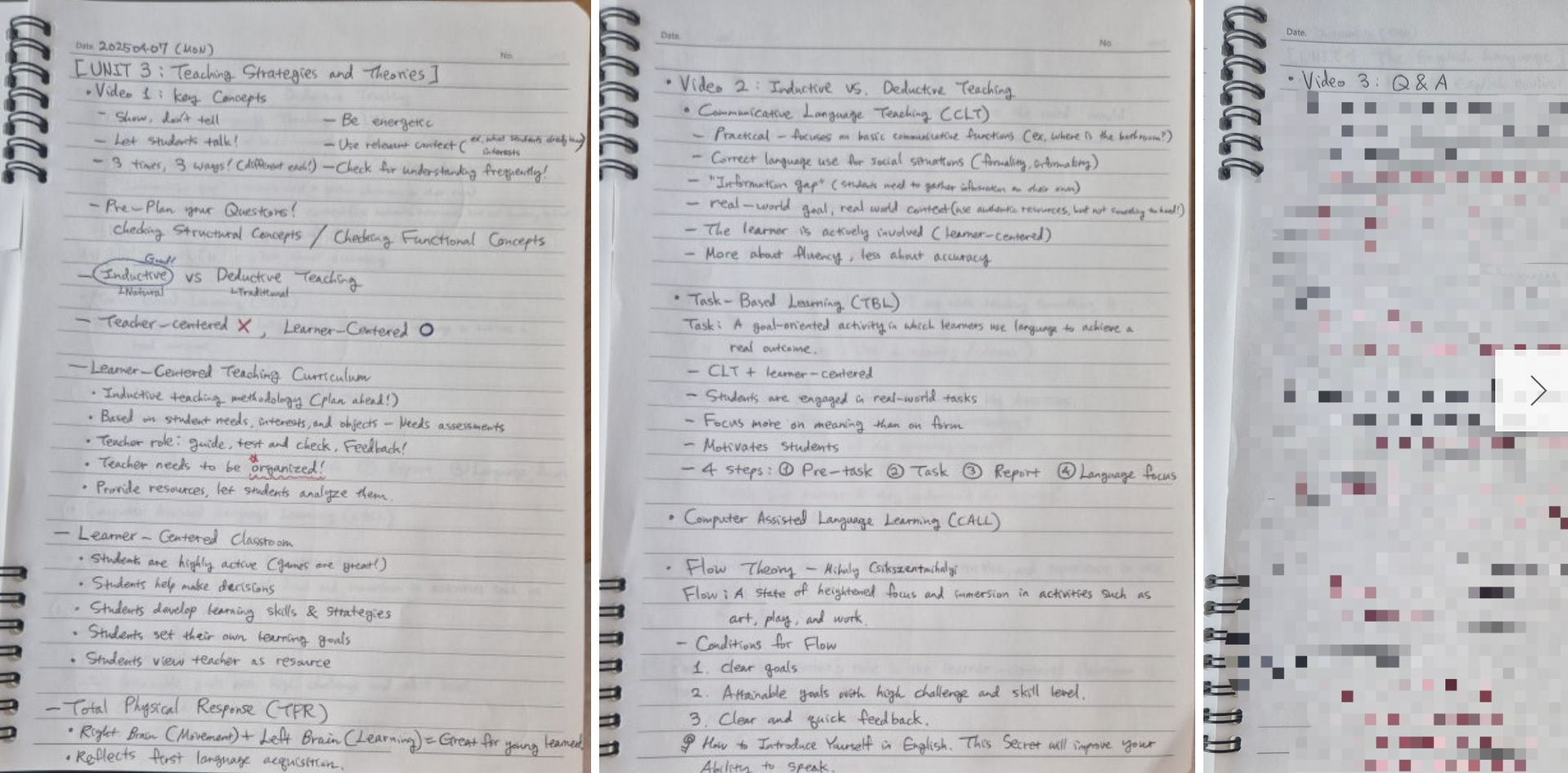
Video 1 : Key Concepts
Key Concepts
- Show, don’t tell
- Let Students talk!
- Three times, three ways! (make sure all three times are different)
- Use your resources: even you! (Use your body motions)
- Be energetic
- Use relevant context (ex. what students already know, interests)
- Check for understanding frequently!
Context
- Language in context… Authentic(difficult) vs Created(significant control)
- Interesting?
- Useful?
- Emotional / Dramatic (the more dramatic, the more emotion, the more memorable)
- Understandable?
*You need to keep all of them in mind!*
Checking for Understanding
- Emphasize important words.
You broke your arm. Do you need to go to the doctor?
You sneezed. Do you need to go to the doctor?
- Grammar: Don’t use the grammar in your question!
If I win the lottery, I will buy a new car. (X)
Did I win the lottery? Do I have a new car? (O), because your students get to think more!
Pre-plan your questions!
: Checking Structural Concepts
They must have gone out! ex. Did they go out?
You should stop smoking. ex. Did you stop smoking?
-> Try using different grammar structure that is different from the original statement!
: Checking Functional Concepts
Why don’t you see a doctor? ex. Did this person see a doctor? What does a friend want?
You should’ve studied more. ex. Did they pass their test?
Prepare your questions and ask manymanymany questions!
Inductive vs Deductive Teaching
Inductive(Natural)
- Students learn through observation, experience, and practice (action O, explain X)
- There is no direct explanation of the rules before the student is introduced to the grammar
Deductive Teaching(Traditional)
- Students are given the grammar rules as their introduction, before they see the grammar in action.
- According to the deductive approach, they should then be able to create language using the rules.
Differences between inductive and deductive teaching.
Teacher or Learner?
Teacher-Centered (Bad Teaching)
- Teacher Talk Time (TTT)
- Teacher presents material - Student is told the material(X discover)
- Teacher makes decisions
- Teacher creates the goals
Learner-Centered (Good Teaching)
- Organic view of SLA (More activities)
“Learner centeredness is a process of acquiring skills as opposed to a subject-centered
approach, which views language as a body of knowledge to be learned.” David Nynan
- Student discovers
- Explain why you’re doing things!
Learner-Centered Teaching Curriculum
- Inductive teaching methodology (plan ahead!)
- Based on student needs, interests, and objects - Needs assessments
- Teacher role : guide, Test and check. Feedback!
- Teacher needs to be organized!
- Provide resources, let students analyze them
Learner-Centered Classroom
- Students are highly active (games are great!)
- Students help make decisions
- Students develop learning skills & strategies
- Students set their own learning goals
- Students view teacher as resource
Total Physical Response (TPR)
Right brain(Movement) + Left brain(Learning) = Great for young learners!
Reflects first language acquisition
Video 2 : Inductive vs Deductive Teaching
Communicative Language Teaching (CLT)
- Practical - focuses on basic communicative functions(ex. Where is the bathroom?)
- Correct language use for social situations(formality, informality)
- “Information gap”
- real-world goal, real-world context(use authentic resources. but it can be a bit overwhelming for students, be careful!)
- The learner is actively involved (learner-centered)
- More about fluency, less about accuracy
Task-Based Learning (TBL)
Task: “A goal-oriented activity in which learners use language to achieve a real outcome”
- CLT + learner-centered
- Students are engaged in real-world tasks
- Focus more on meaning than on form
- Motivates students
Task-Based Learning 4 steps :
1. Pre-task
2. Task
3. Report
4. Language focus
Computer Assisted Language Learning (CALL)
Flow Theory - Mihaly Csikszentmihalyi
Flow is “a state of heightened focus and immersion in activities such as art, play, and work”
Conditions for Flow:
1. Clear goals
2. Attainable goals with high challenge and skill level
3. Clear and quick feedback
How to Introduce Yourself in English. This Secret will Improve your Ability to speak
Summary
- Inductive vs. Deductive
- Learner-centered
- TPR (Total Physical Response)
- CLT (Communicative Language Teaching)
- TBL (Task Based Learning)
- CALL (Computer Assisted Language Learning)
- Flow Theory
Video 3 : Q&A
[UNIT 4 : The English Language]
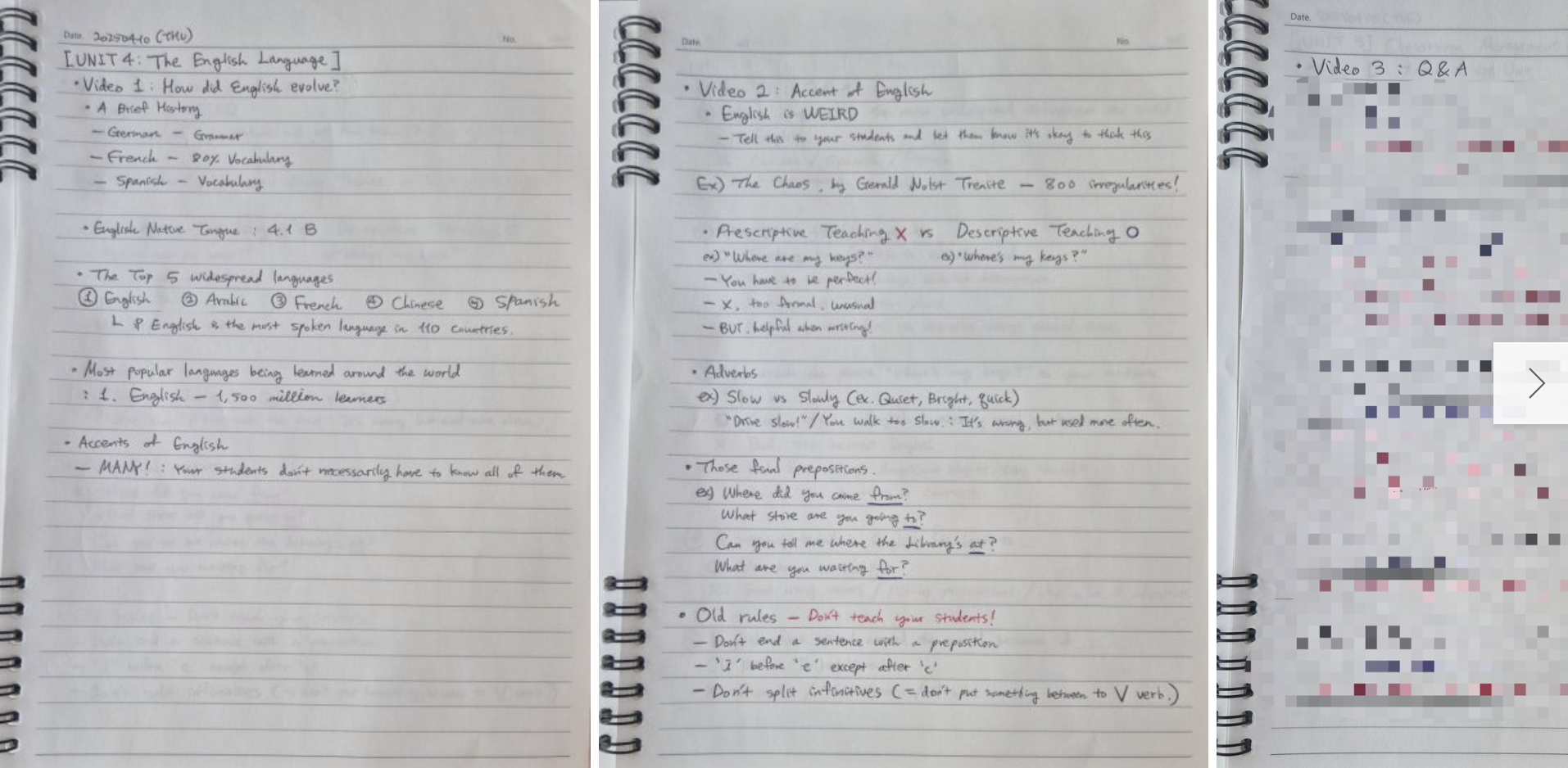
Video 1 : How did English Evolve?
A Brief History
- German - Grammar
- French - 80% Vocabulary
- Spanish - Vocabulary
English Native tongue : 4.1 billion
The Top 5 widespread languages
1. English
2. Arabic
3. French
4. Chinese
5. Spanish
English is the most spoken language in 110 countries.
Most popular languages being learned around the world
1. English 1,500 million learners
Accents of English
- Your students don’t necessarily have to know all of them
Video 2 : Accents of English
- English is WEIRD - Tell your students this and let them know that it’s okay to think so
Ex) The Chaos, by Gerald Nolst Trenite
- 800 irregularities!
Prescriptive Teaching - You have to be perfect! - X, too formal, it’s not how the language is normally used. BUT this one is helpful when it comes to writing!
- “Where are my keys?”
Descriptive Teaching
- “Where’s my keys?
Adverbs
- Slow vs. Slowly
ex) Drive slow! / You walk too slow.
- Quiet
- Bright
- Do it real quick! - it’s supposed to be quickly but no one says that anymore
Those final prepositions
- Where did you come from?
- What store are you going to?
- Can you tell me where the Library’s at?
- What are you waiting for?
Old rules - Don’t teach your students!
: Don’t end a sentence with a preposition
: ‘i’ before ‘e’ except after ‘c’
: Don’t split infinitives
Video 3 : Q&A
Unit 1~4까지 공부해보고 느낀 점은
일단 생각보다 아주 기본적인 것부터 알려준다.
잘 가르치는게 무엇인지, 잘 배운다는 것은 무엇인지,
선생님의 입장, 학생의 입장,
어떤 교육이 효과적인지, 어떤 교육이 비효과적인지,
영어라는 언어 그 자체는 무엇인지, 어떻게 만들어지고 변해왔는지 등에 대해서 배웠다.
영어강사자격증이라고 해서 정말 영어를 어떻게 효과적으로 가르칠 수 있는지에 대해서만
배우겠거니 생각했는데 더 넓은 영역을 배울 수 있어 좋았다.
꼭 영어가 아니더라도 무언가 가르치는 사람이 들으면 좋을 것 같은 강의들이다.
Unit 4까지 들었으니까 여기까지 시험을 한 번 볼까? 생각했는데
전체 강의를 다 보고 시험 오픈을 권장하셔서 그렇게 해볼 생각이다.
각 유닛 마지막 비디오에 나오는 문제들이 거의 그대로 나온다고 해서 잘 봐둬야겠다.
영어강사자격증인 TESOL자격증을 취득하는 방법에 여러가지가 있는 것 같았는데,
나는 WVC테솔을 신청했다.
이유는 :
1. “미국 대학교“라는 타이틀이 더 공신력있게 느껴짐
2. 모든 과정이 온라인으로 이루어진다는 점
3. 대학교에서 오프라인으로 배우는 테솔도 고민했지만 오프라인 테솔은 기간도 비용도 이동거리도 부담되었고, 이미 영어수업을 3년동안 해오고 있는 나로서는 실기가 가능하다는 점이 그리 큰 메리트로 느껴지지는 않았다. 왜냐면 이미 매일이 실전이니까..
4. 테솔을 신청하면 어린이 테솔까지 같이 무료로 수강가능 하다는 점! 초등영어과외를 주로 하고 있어서 이 과정이 나에게 실질적으로 제일 도움이 될 것 같았다.
그리고,
장학생 선발도 됐다!
매달 말에 장학생을 모집하니 참고해서 신청해보면 좋을 것 같다.
장학 혜택에는 :
1. 테솔 취득 장학금 65만원 지원
2. 어린이테솔(TEC) 무료수강
3. 원어민 파닉스 지도사 무료수강
4. 1:1 코칭 E.T 실습과정 무료수강
이 있다.
아마 온라인테솔 신청 전에 가격면에서 부담이 되어 신청을 망설이는 분들도
장학혜택과 함께라면 더 편한 마음으로 공부할 수 있을 것 같다.(는 제 얘기입니다)
월말에 홈페이지에 올라오는 공지사항을 열심히 확인하기!
문의 카톡을 드리면 더 자세히 설명해 주신다.
장학생으로 선발되고 나서는
온라인테솔 강의를 틀어두고,
들으면서 블로그에 필기를 하고,
그 필기를 노트에 적어서 다시 요약하는 과정으로 공부했다.
이렇게 하면 좀 오래걸리긴 하지만
그래도 한 번 강의를 들을 때 제대로 공부하는 느낌이 나서 좋다.
[UNIT 1 : An Introduction to Language Learning]
Video 1 : Acquisition VS Learning
Acquisition (natural, subconscious, context (ex. walking)
VS
Learning context, deliberate (ex. learning how to play the violin)
First Language Acquisition
learn through context.
create things we’ve never heard before
(ex. I runned - 부모님이 말하는 과거형을 듣고 제대로 몰라도, 틀려도 일단 룰을 적용해 봄)
General Rules
SVO : Subject - Verb - Object
ex) “Mommy go home”
Second Language Acquisition
Building Blocks X - Growing a garden O
We want to learn language in the most natural way possible
Organic Metaphor : Learners do not learn one thing at a time, but learn numerous things simultaneously. Some may be forgotten.
Only children can learn English effectively? No, Adults can too!
In order to learn throughly, we need person to person contact, X computer!
Reasons for Learning English
English : Widespread 1st : Mandarin Chinese, 2nd : Spanish, 3rd : English
: Family, Work, Personal Growth, School, Travel, Internet
Factors that can affect language learning
: Motivation(interest), Study Skills(without it, X can learn effectively), Immersion opportunities(you need to be immersed in the culture), Input(speaking? reading?)
These are the things you need to improve in your classroom
Video 2 : What makes a Good learner?
- effective study skills
Study outside of class(music, movie) / Technology : computers, libraries, the internet!
- take risks with the language (making mistakes is awesome!)
- reflective (it helps them to realize how far they’ve come, helps them to see what they should improve on)
- use the language (practice!)
- all four modalities (reading, listening, speaking, writing)
- ask questions (it means they are processing, listening)
*A good learner uses the language all the time*
Students dont’ know what a good learner is. As a teacher, it is your job to teach them how to become a good learner as well!
Young Learners
- more structure (what is going to happen now and next. they need organized classroom)
- very clear instructions (they have to know exactly what they’re supposed to do)
- consistent attention (always pay attention to your students)
- technology (something they are familiar with)
- a varied curriculum (they want something different, interesting activities)
- creative ways to use the language (ex. they want to do fun things! writing stories, drawing)
Adult Learners (very different from Young Learners)
- more independent
- and more likely to question your methods
- Fun? What’s fun?
- Complex barriers to learning (money, home, work etc)
- more engaged in learning
- Adults need praise too!
- reasons for learning
Summary
- First language acquisition : quick, subconcious, follows a pattern
- Second language acquisition : less concrete, more organic
- Reading, Writing, Speaking, Listening
- Motivation, study skills, immersion, input
- Younger learners
- Adult Learners
Video 3 : Q&A
복습 & 문제 풀이
[UNIT 2 : An Introduction to Language Teaching]
Previous imageNext image
Video 1 : What makes a Good Teacher?
What makes a good teacher?
- It depends on who you ask. But there are fundamentals!
1. Know your stuff. (you’ll be confident, students will get the answers they need)
2. Care about what you’re doing (If you don’t care, students won’t care. Be passionate!)
3. Reflect on your teaching. (check what worked and not)
4. Be willing to change what doesn’t work. (If your students don’t seem to get it, change your method in the middle of the class)
Students Perspective
Patience (English is a hard language to learn, it takes time)
Sincerity (Be honest. Tell your students if they’re doing a good / bad job)
Organization (smooth & effective lesson)
Punctuality (Start on time! Use every minute you have)
Awareness of needs (Beware of student’s individual needs. They are all different. Be prepared to help them)
Flexibility and imagination (Follow your students interests)
Variety and Balance (don’t focus on just one)
Approachability (Be available for your students when they are struggling)
Professionalism (if you become too easygoing, students will take advantage of that. You know best!)
Control (We are doing this, and after that we are doing that)
Knowledge (make sure you know what you’re teaching)
Stimulation (make sure that they are engaging in the class)
Security (It is okay to make mistakes, mess up. Help them feel safe)
Teacher Perspective
Interest (if you’re not interested, it will show in your teaching)
Cultural Awareness (Be aware of the culture of English and your students)
Knowledge (You need to know what your teaching)
Reflection (keep a journal - what worked and not)
Patience (universally important)
Encouragement and Praise (your students should know that they are doing well)
Clarity (be clear about what’s happening)
Control (know what’s happening and next)
Encourage Independence (they don’t have to learn everything in class, make them use resources outside of the class)
Open Mind (culture, how they learn, try new things)
Build Relationships (groups)
Remember YOUR learning! (remind yourself of the experience of your own learning)
RELAX (your students will relax as well)
Video 2 : Philosophy of Teaching
2 pages
Beliefs about teaching and learning
How you put those into practice
What do you believe about…
How students learn? (FLA!)
What a classroom should look like? (what’s your ideal class like? where’s the board, door, window, seats? technology? see how close you can get to that)
the role of the teacher? (guide? mentor?)
homework? classwork? group work? (what kind of work?)
the role of the student? (sponge? active? choices? goals? how?)
correcting errors in the classroom?
Philosopy of Teaching : In the Classroom
Specific activities (game? project? group work?)
Course goals
Classroom design
Type of homework
Use of technology / textbook / worksheets
How you correct spoken or written errors
Intercultural Awareness
Culture - Language, Manners of interacting, Thoughts, Values, Expected Behaviors, Practices, Relationships, Customs, Roles, Rituals, Courtesies, Communication
Language and culture are intertwined
Culture of English
Cultural diversity in the classroom
What does Intercultural Awareness look like in the classroom?
The Target Culture
- No Stereotyes (Mcdonalds)
- Avoid imposing your cultural beliefs on your students (Your experiences may not be everyone’s)
Your Student’s Culture
- Be aware of and show respect for where your students come from in life
- Allow your students to teach each other, especially in a diverse classroom
*Be aware of, and show respect for where your students come from in life*
Monolingual Classes
Benefits
- Easily anticipate problems (ex. same pronunciation problem)
- Translating (it can be handy, but X too much)
- Instructions in Native Language (X overwhelm)
- English Only Week!
Disadvantages
-Where’s the real world? (no eng in daily lives)
- Translating (it may help at the beginning, later, nope)
- Culture? (in textbook, movie X real life)
- Motivation (not 100 in eng environment, it can fall)
Tips & Tricks
- Be Chill
- Bring people into the class
- Projects: real-world! (ex. how would you order in the states?)
- TV, Movies, Music (different speakers)
- Newspapers (not too hard, enjoyable)
- Magazines
- Build Resources
- Library
- Network (exchange ideas)
Multilingual Classes
- Generally in a native-English speaking area
- Translation? Nope!
- Cultural diversity
- Students learn from each other
- Stronger motivation
- Teacher has more work to do - Learner English!
Summary
What makes a good teacher?
Philosophy of Teaching
Intercultural Awareness
Video 3 : Q&A
[UNIT 3 : Teaching Strategies and Theories]
Video 1 : Key Concepts
Key Concepts
- Show, don’t tell
- Let Students talk!
- Three times, three ways! (make sure all three times are different)
- Use your resources: even you! (Use your body motions)
- Be energetic
- Use relevant context (ex. what students already know, interests)
- Check for understanding frequently!
Context
- Language in context… Authentic(difficult) vs Created(significant control)
- Interesting?
- Useful?
- Emotional / Dramatic (the more dramatic, the more emotion, the more memorable)
- Understandable?
*You need to keep all of them in mind!*
Checking for Understanding
- Emphasize important words.
You broke your arm. Do you need to go to the doctor?
You sneezed. Do you need to go to the doctor?
- Grammar: Don’t use the grammar in your question!
If I win the lottery, I will buy a new car. (X)
Did I win the lottery? Do I have a new car? (O), because your students get to think more!
Pre-plan your questions!
: Checking Structural Concepts
They must have gone out! ex. Did they go out?
You should stop smoking. ex. Did you stop smoking?
-> Try using different grammar structure that is different from the original statement!
: Checking Functional Concepts
Why don’t you see a doctor? ex. Did this person see a doctor? What does a friend want?
You should’ve studied more. ex. Did they pass their test?
Prepare your questions and ask manymanymany questions!
Inductive vs Deductive Teaching
Inductive(Natural)
- Students learn through observation, experience, and practice (action O, explain X)
- There is no direct explanation of the rules before the student is introduced to the grammar
Deductive Teaching(Traditional)
- Students are given the grammar rules as their introduction, before they see the grammar in action.
- According to the deductive approach, they should then be able to create language using the rules.
Differences between inductive and deductive teaching.
Teacher or Learner?
Teacher-Centered (Bad Teaching)
- Teacher Talk Time (TTT)
- Teacher presents material - Student is told the material(X discover)
- Teacher makes decisions
- Teacher creates the goals
Learner-Centered (Good Teaching)
- Organic view of SLA (More activities)
“Learner centeredness is a process of acquiring skills as opposed to a subject-centered
approach, which views language as a body of knowledge to be learned.” David Nynan
- Student discovers
- Explain why you’re doing things!
Learner-Centered Teaching Curriculum
- Inductive teaching methodology (plan ahead!)
- Based on student needs, interests, and objects - Needs assessments
- Teacher role : guide, Test and check. Feedback!
- Teacher needs to be organized!
- Provide resources, let students analyze them
Learner-Centered Classroom
- Students are highly active (games are great!)
- Students help make decisions
- Students develop learning skills & strategies
- Students set their own learning goals
- Students view teacher as resource
Total Physical Response (TPR)
Right brain(Movement) + Left brain(Learning) = Great for young learners!
Reflects first language acquisition
Video 2 : Inductive vs Deductive Teaching
Communicative Language Teaching (CLT)
- Practical - focuses on basic communicative functions(ex. Where is the bathroom?)
- Correct language use for social situations(formality, informality)
- “Information gap”
- real-world goal, real-world context(use authentic resources. but it can be a bit overwhelming for students, be careful!)
- The learner is actively involved (learner-centered)
- More about fluency, less about accuracy
Task-Based Learning (TBL)
Task: “A goal-oriented activity in which learners use language to achieve a real outcome”
- CLT + learner-centered
- Students are engaged in real-world tasks
- Focus more on meaning than on form
- Motivates students
Task-Based Learning 4 steps :
1. Pre-task
2. Task
3. Report
4. Language focus
Computer Assisted Language Learning (CALL)
Flow Theory - Mihaly Csikszentmihalyi
Flow is “a state of heightened focus and immersion in activities such as art, play, and work”
Conditions for Flow:
1. Clear goals
2. Attainable goals with high challenge and skill level
3. Clear and quick feedback
How to Introduce Yourself in English. This Secret will Improve your Ability to speak
Summary
- Inductive vs. Deductive
- Learner-centered
- TPR (Total Physical Response)
- CLT (Communicative Language Teaching)
- TBL (Task Based Learning)
- CALL (Computer Assisted Language Learning)
- Flow Theory
Video 3 : Q&A
[UNIT 4 : The English Language]
Video 1 : How did English Evolve?
A Brief History
- German - Grammar
- French - 80% Vocabulary
- Spanish - Vocabulary
English Native tongue : 4.1 billion
The Top 5 widespread languages
1. English
2. Arabic
3. French
4. Chinese
5. Spanish
English is the most spoken language in 110 countries.
Most popular languages being learned around the world
1. English 1,500 million learners
Accents of English
- Your students don’t necessarily have to know all of them
Video 2 : Accents of English
- English is WEIRD - Tell your students this and let them know that it’s okay to think so
Ex) The Chaos, by Gerald Nolst Trenite
- 800 irregularities!
Prescriptive Teaching - You have to be perfect! - X, too formal, it’s not how the language is normally used. BUT this one is helpful when it comes to writing!
- “Where are my keys?”
Descriptive Teaching
- “Where’s my keys?
Adverbs
- Slow vs. Slowly
ex) Drive slow! / You walk too slow.
- Quiet
- Bright
- Do it real quick! - it’s supposed to be quickly but no one says that anymore
Those final prepositions
- Where did you come from?
- What store are you going to?
- Can you tell me where the Library’s at?
- What are you waiting for?
Old rules - Don’t teach your students!
: Don’t end a sentence with a preposition
: ‘i’ before ‘e’ except after ‘c’
: Don’t split infinitives
Video 3 : Q&A
Unit 1~4까지 공부해보고 느낀 점은
일단 생각보다 아주 기본적인 것부터 알려준다.
잘 가르치는게 무엇인지, 잘 배운다는 것은 무엇인지,
선생님의 입장, 학생의 입장,
어떤 교육이 효과적인지, 어떤 교육이 비효과적인지,
영어라는 언어 그 자체는 무엇인지, 어떻게 만들어지고 변해왔는지 등에 대해서 배웠다.
영어강사자격증이라고 해서 정말 영어를 어떻게 효과적으로 가르칠 수 있는지에 대해서만
배우겠거니 생각했는데 더 넓은 영역을 배울 수 있어 좋았다.
꼭 영어가 아니더라도 무언가 가르치는 사람이 들으면 좋을 것 같은 강의들이다.
Unit 4까지 들었으니까 여기까지 시험을 한 번 볼까? 생각했는데
전체 강의를 다 보고 시험 오픈을 권장하셔서 그렇게 해볼 생각이다.
각 유닛 마지막 비디오에 나오는 문제들이 거의 그대로 나온다고 해서 잘 봐둬야겠다.
 카톡상담
카톡상담